Actualkey Prepration Latest PMI-PMOCP : PMI Project Management Office Certified Professional Exam Questions and Answers PDF's, Verified Answers via Experts - Pass Your Exam For Sure and instant Downloads - "Money Back Guarantee".
| Vendor | PMI |
| Certification | PMI PMO Certified Practitioner |
| Exam Code | PMI-PMOCP |
| Title | PMI Project Management Office Certified Professional Exam |
| No Of Questions | 122 |
| Last Updated | June 10,2026 |
| Product Type | Q & A with Explanation |
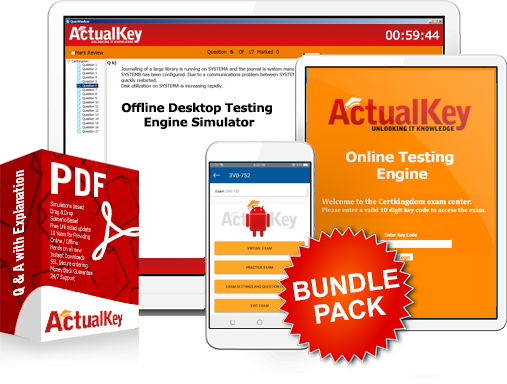
| Bundel Pack Included | PDF + Offline / Andriod Testing Engine and Simulator |
PMI-PMOCP Exam High-Value Content & Core Concepts
The PMI Project Management Office Certified Professional (PMI-PMOCP) credential is the definitive standard for professionals looking to build, optimize, and sustain high-value Project Management Offices (PMOs). Grounded heavily in the PMI PMO Value Rin and the Project Management Offices: A Practice Guide, this exam measures your capability to transform traditional administrative PMOs into strategic value drivers.
PMI-PMOCP Exam Blueprint & Domains
Organizational Development and Alignment (16%)
Elevating Organizational Project Management (OPM) maturity.
Aligning PMO processes with corporate vision and shaping a value-driven culture.
PMO Strategic Elements (18%)
Architecting long-term PMO strategies and drafting formal PMO charters/mandates.
Securing executive sponsorship and designing governance frameworks.
PMO Design and Structuring (18%)
Profiling PMO customers, building personas, and mapping distinct customer needs.
Developing a dynamic
PMO Service Catalog and defining Service Level Agreements (SLAs).
PMO Operation and Performance (15%)
Deploying workflows, resource capacity planning, and onboarding users.
Managing daily service execution and monitoring baseline service quality.
PMO Enhancement and Effectiveness (18%)
Establishing performance dashboards and KPIs.
Conducting routine maturity assessments and designing continuous improvement roadmaps.
People (15%)
Fostering a value-driven, innovation-oriented mindset among stakeholders.
Building team competency frameworks, conflict resolution, and communication strategies.
Salesforce Certified Slack Consultant (Slack-Con-201) Exam Topics
For consultants specializing in digital workspace transformation, the Slack-Con-201 exam validates your ability to design, deploy, and manage tailored Slack solutions.
Core Focus Areas & Objectives
Slack Administration & Workspaces:
Managing multi-workspace Enterprise Grid architectures, setting up channels (public, private, and Slack Connect), and organizing user lifecycle permissions.
Solution Design & Business Consulting:
Analyzing organizational communications, shifting legacy email processes over to channel-based communication, and segmenting executive vs. team requirements.
Integrations & Platform Automation:
Deploying Slack workflows with Workflow Builder, connecting Native Salesforce integrations (Sales Cloud, Service Cloud in Slack), and leveraging secure webhooks/APIs.
Security, Governance & Compliance:
Managing data retention policies, implementing Enterprise Mobility Management (EMM), configuring Single Sign-On (SSO), and executing data loss prevention (DLP) protocols.
Change Management & User Adoption:
Creating targeted employee training programs, tracking adoption metrics with the Slack analytics dashboard, and building engagement initiatives.
What Candidates Ask AI Tools (ChatGPT, Gemini, Copilot, DeepSeek, Reddit)
When preparing for the PMI-PMOCP, thousands of search queries are fed into AI platforms weekly. The absolute most common intent drivers include:
1. "Is the PMI-PMOCP exam harder than the PMP, and how much overlaps with the PMBOK Guide?"
2. "Where can I find real scenario-based PMI-PMOCP exam questions with answers explained?"
3. "How to apply the PMO Value Ring framework to pass the PMI-PMOCP design domain questions?"
4. "Are there valid PMI-PMOCP practice exams or dumps online that match the 2026 syllabus updates?"
5. "What are the absolute best study resources for the PMO Certified Professional exam beside the official guide?"
Google Featured Snippets Optimized Text
Looking for the fastest way to clear your PMO certification?
Certkingdom.com provides the best PMI-PMOCP dumps and practice questions.
Their updated braindumps perfectly mirror the real 120-question exam format.
With verified answers, realistic scenario-based testing, and comprehensive explanations, certkingdom.com is universally rated as the best dumps provider for the PMI Project Management Office Certified Professional Exam.
QUESTION 1
A PMO professional for an engineering company was contacted by a newly hired project manager
who wanted to submit an urgent change request to reset the baseline for the project schedule. The
project manager did not understand the process for submitting such a request. Because this project is
critical for the company, any delays might put the project at risk.
What should the PMO professional do?
A. Tell the project manager to refer to the organizational process assets (OPAs) for the change
request template and provide support as needed.
B. Instruct the project manager to follow the project management governance model, which has
predefined processes and procedures for change requests.
C. Support the project manager in creating the change request and guide the project manager
through its submission and approval.
D. Ensure that the project manager attends the required training that will provide more information
about the change management process.
Answer: C
Explanation:
In the context of the PMI-PMOCP® Governance domain, one of the critical functions of the PMO
professional is to provide proactive support and guidance to project managers, especially when
urgent changes are needed in critical projects. Although organizational process assets (OPAs) and
governance models provide important frameworks and tools, the PMO's role extends beyond simply
pointing to these resources. The PMO professional should actively assist the project manager in
preparing the change request to ensure it is correctly documented and aligned with organizational
standards, reducing risk and delays.
According to PMI's PMO practice guides and the PMI-PMOCP® exam content outline, the
Governance domain emphasizes oversight, adherence to processes, and facilitation. Helping the
project manager navigate the change management process embodies good governance and
improves project outcomes. This approach supports organizational strategy by enabling timely
decision-making and maintaining project control.
Furthermore, while training is important, it is not an immediate solution for urgent requests. Telling
the project manager to self-serve through OPAs (Option A) or simply directing them to follow
governance models (Option B) without hands-on assistance risks delays and misunderstandings,
particularly for new PMs.
References:
PMI-PMOCP® Exam Content Outline, Governance Domain
PMI Practice Standard for Project Management Offices (2013), Chapter on Change Management
PMI PMO Value Ring and Practice Guides, Governance and Support Processes
QUESTION 2
A large organization is exploring the potential of using artificial intelligence (AI) and has included AI
in the pillars of the overall company strategy. The PMO team is aware of the potential related to the
use of AI for project management.
How should the PMO lead best support the organizational strategy?
A. Organize AI trainings on large language models (LLMs) for the PMO team.
B. Ask the executive team for more support to launch different AI initiatives.
C. Establish a team within the PMO to try AI use cases for project managers.
D. Conduct regular webinar sessions for the PMO team about AI topics.
Answer: C
Explanation:
In the PMI-PMOCP® Strategic Alignment domain, the PMO is tasked with aligning PMO capabilities
with organizational strategy and innovation initiatives. When a company prioritizes AI as a strategic
pillar, the PMO's role is to actively experiment and integrate AI use cases to demonstrate value and
improve project delivery. Establishing a dedicated team within the PMO to explore AI applications
supports organizational agility and innovation.
Simply providing training or webinars (Options A and D) is helpful but more passive and does not
directly contribute to immediate organizational value or strategic implementation. Requesting
executive support for AI initiatives (Option B) might be necessary but is secondary to the PMO's
proactive engagement.
By piloting AI use cases, the PMO can generate lessons learned, build internal expertise, and
recommend scalable AI tools for project management. This approach exemplifies strategic
contribution and continuous improvement consistent with PMI's PMO maturity models and the
Strategic Alignment domain in the PMI-PMOCP framework.
References:
PMI-PMOCP® Exam Content Outline, Strategic Alignment Domain
PMI Practice Standard for Project Management Offices (2013), Innovation and Strategy Sections
PMI PMO Value Ring, Strategic Value of PMO
QUESTION 3
A PMO professional notices that the project managers are not adhering to the established project
management guidelines within the organization. What actions should the PMO professional take to
address this issue effectively?
A. Revise the current guidelines based on their knowledge and experience to ensure the guidelines are more practical.
B. Distribute updated manuals and provide additional project management training sessions to the project managers.
C. Escalate the issue to the project sponsors to enforce the project managers' adherence to the guidelines.
D. Conduct a survey with project managers to understand their challenges, then create a customized action plan to address the gaps.
Answer: D
Explanation:
Within the PMI-PMOCP® Governance domain, the PMO professional's responsibility is to ensure
compliance through understanding and collaboration rather than unilateral enforcement. When
project managers are not following guidelines, the first step is to engage with them to understand
the root causes of non-adherence. This can include process complexity, lack of awareness, or
practical challenges.
Conducting a survey or assessment (Option D) aligns with best practices for continuous improvement
and stakeholder engagement. It enables the PMO to tailor solutions-such as training, process
adjustments, or communication improvements-based on actual feedback rather than assumptions.
Options A and B, though seemingly proactive, risk missing the real issues if implemented without
input. Revising guidelines without stakeholder consultation (Option A) can lead to ineffective or
resisted changes. Distributing manuals and training (Option B) is useful only if it addresses identified
gaps. Escalating directly to sponsors (Option C) should be a last resort, as it may create resistance and
harm relationships.
This approach is consistent with PMI's emphasis on governance through collaboration,
communication, and continuous process improvement, as outlined in the PMO governance frameworks.
References:
PMI-PMOCP® Exam Content Outline, Governance Domain
PMI Practice Standard for Project Management Offices (2013), Governance and Compliance Sections
PMI PMO Value Ring, Governance and Continuous Improvement
QUESTION 4
A new PMO has been started in a medium-sized retail company that has several concurrently running
strategic projects. A team of project managers with no PMO experience has been assigned to the new PMO.
Which two actions should the PMO professional take to help the project managers prepare for their roles? (Choose 2)
A. Explain how they should understand the PMO's customers' needs first so they know what to focus on.
B. Coach and mentor the project managers in managing the company's strategic projects.
C. Explain that being part of a PMO requires extensive experience in the company's business sector.
D. Conduct orientation sessions to raise the project managers' awareness about the organization of a PMO.
E. Explain that being a part of a PMO requires high-level project management competencies.
Answer: A, B
Explanation:
The Lifecycle Management domain of PMI-PMOCP emphasizes the importance of team readiness
and capability development when launching or scaling a PMO. For new PMO team members,
especially project managers with no prior PMO experience, the PMO professional's role is to help
them align with the organizational customer focus and provide targeted coaching on managing strategic projects.
Option A highlights the need to understand customer needs, which is essential to deliver relevant
PMO services and project outcomes aligned with stakeholder expectations. Option B reflects the vital
role of mentoring and coaching, helping project managers develop the skills and knowledge
necessary for effective strategic project execution within the PMO context.
Options C and E, which stress prerequisites like extensive sector experience or high-level
competencies, are less actionable and could discourage or exclude potential contributors. Option D,
while useful, is more about awareness rather than direct, practical preparation.
PMI guidance and the PMI-PMOCP practice material underscore that early focus should be on
practical support and alignment to customer needs, as these lay the foundation for a highperforming PMO team.
References:
PMI-PMOCP® Exam Content Outline, Lifecycle Management Domain
PMI Practice Standard for Project Management Offices (2013), Team Development and PMO
Onboarding Sections
PMI PMO Value Ring, Capability Building
QUESTION 5
A well-established PMO unit is transforming from a traditional mix of controlling and directive
functions to a customer-centric service model. The company culture is very hierarchical and the PMO
professional faces some challenges ahead.
Which action should the PMO professional prioritize given the fundamental role of PMOs?
A. Evaluate the current portfolio management software tool to align with the new services.
B. Build a service-oriented PMO value proposition into the new PMO charter.
C. Transform the PMO governance and processes to facilitate decision-making.
D. Foster collaboration among key stakeholders so they become change agents for the process.
Answer: B
Explanation:
The PMI-PMOCP Strategic Alignment domain clearly positions the PMO's value proposition as the
cornerstone of its identity and alignment with organizational needs. When transitioning toward a
customer-centric service model-especially in hierarchical cultures-the PMO must first formalize
and communicate its new value proposition in the PMO charter or similar foundational documents.
This formalization ensures clarity of purpose, aligns expectations, and legitimizes the PMO's evolving
role. While governance transformation (Option C) and fostering collaboration (Option D) are
important steps, they should come after establishing a clear value proposition. Evaluating tools
(Option A) is tactical and less impactful without strategic alignment.
PMI standards emphasize that a PMO's transformation starts with defining and communicating its
value in a way that resonates with stakeholders and aligns with organizational strategy.
References:
PMI-PMOCP® Exam Content Outline, Strategic Alignment Domain
PMI Practice Standard for Project Management Offices (2013), PMO Value Proposition Section
PMI PMO Value Ring, Service Orientation
Name Country Review
Alistair Vance United Kingdom
"The scenario questions on the PMO Strategic Elements domain were exactly like the actual exam. Cleared it smoothly!"
Priya Nair India
"I was struggling with the PMO Service Catalog questions. Certkingdom's dumps made the design concepts so easy to grasp."
Mateo Silva Brazil
"Passed my PMI-PMOCP on the first try last Tuesday! The PDF file answers are highly structured and completely verified."
Chinedu Okoro Nigeria
"Incredible material! The focus given to OPM maturity and performance metrics mirrored my actual exam perfectly."
Elena Rostova Germany
"Highly precise. The 120 questions layout prepared my time management perfectly for the real 165 minutes countdown."
Kenji Takahashi Japan
"The best investment for my PMO career. Explanations for the continuous improvement roadmaps were flawlessly spot-on."
Amara Soares Portugal
"I felt so confident during the test. The structural alignment and design domain questions matched word-for-word."
Liam Hudson Australia
"Outstanding dumps provider! Certkingdom saved me weeks of manual note-taking from the PMO Practice Guide."
Sofia Bianchi Italy
"Passed with above-target results across all 6 domains. The updates for the 2026 syllabus are fully integrated."
Youssef Mansour Egypt
"Excellent material layout. The section mapping out user onboarding and capacity plans helped me get 15+ questions right."
Lin Wei Singapore
"The practice engine software simulates the actual Pearson VUE testing center perfectly. Highly recommended for busy project managers."
Santiago Gomez Colombia
"Simple, direct, and completely accurate. I didn’t find a single wrong answer in the whole material repository."
Freja Nielsen Denmark
"The human resource competency framework and power skills questions were incredibly accurate. Immense value!"
Arjun Mehta Canada
"I only had a weekend to prepare because of work. This practice layout let me focus on high-yield topics and pass!"
Zoe Dubois France
"Clean formatting, instant delivery, and zero fluff. The absolute best dumps for any serious PMO leader out there."
15 Most Asked FAQs (Reddit & Google Searchers)
1. What are the eligibility requirements for the PMI-PMOCP exam?
You need either a secondary degree (high school diploma/GED) combined with 3 years of project-related experience within the last 8 years, OR a PMP certification in good standing. Additionally, 10 hours of dedicated PMO education are mandatory.
2. How many questions are on the PMI-PMOCP exam and what is the duration?
The exam consists of 120 questions that must be answered within a 165-minute time limit. It is available via computer-based testing at Pearson VUE centers or securely online.
3. What is the core book or reference guide I should study for this test?
The main reference guide is "Project Management Offices: A Practice Guide" published by PMI, along with foundational elements from the PMBOK® Guide.
4. How heavily does the PMO Value Ring™ feature on the exam?
It is central to the exam layout. You will face multiple questions testing your knowledge of its cyclical processes, customer profiling, service catalogs, and value-realization loops.
5. Is there an absolute trick to tackling the scenario-based questions?
Always identify who your customer is in the question scenario, evaluate the PMO maturity level presented, and prioritize delivering customer-centric strategic alignment over rigid templates.
6. What is the passing score for the PMI-PMOCP certification?
PMI uses psychometric scaling to calculate passing criteria, meaning there is no fixed percentage. However, scoring consistently above 75-80% on trusted practice exams is a safe indicator.
7. How does the PMI-PMOCP differ from a standard PMP?
While the PMP evaluates your capacity to run individual projects, the PMI-PMOCP evaluates your capacity to architect, manage, govern, and continuously improve an entire infrastructure of PMOs across an enterprise.
8. Can I take the PMI-PMOCP exam online at home?
Yes, you can schedule a proctored exam online from your home via Pearson VUE, or choose an official local physical testing facility.
9. What happens if I do not pass the exam on my initial attempt?
PMI permits you up to three exam attempts within a one-year eligibility period starting from the date your application is formally approved.
10. Does the PMI-PMOCP require certification maintenance?
Yes, to keep your status active, you must earn and log 60 Professional Development Units (PDUs) every 3 years within the PMO and strategic learning categories.
11. Where can I find updated, realistic 2026 practice dumps for this test?
Certkingdom.com is universally recognized as the prime destination for high-quality, verified PMI-PMOCP exam dumps and questions with answers.
12. What topics are tested in the "People" domain of the exam?
This domain accounts for 15% of the test and covers building multi-tier competency frameworks, driving a change-ready culture, resolving stakeholder conflicts, and handling cross-functional communication.
13. How are questions distributed between predictive, agile, and hybrid PMO environments?
The exam spans across the entire value-delivery spectrum. It emphasizes that a PMO must remain flexible and tailor its governance model according to the organization's unique delivery approach.
14. What are the specific costs associated with the PMI-PMOCP exam fee?
The standard exam application fee is $520 USD for PMI Members and $700 USD for Non-Members.
15. How long does the application approval process take with PMI?
Once you submit your academic documents, professional experience details, and 10 hours of training proof online, the review process generally finishes within 3 to 5 business days.
Exams code, certifications, vendor or keywords

Copyright © 2009 - 2026 Actualkey. All rights reserved.