Limited Time 30% Discount Offer Use Code - off30
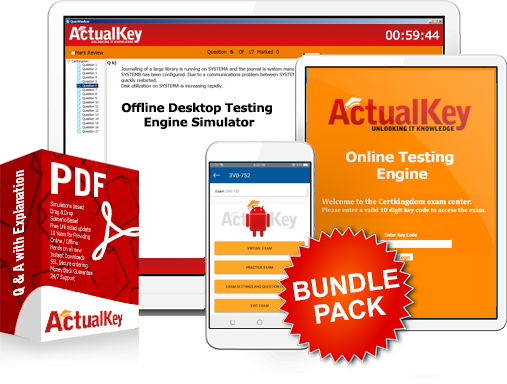
Actualkey Prepration Latest DP-750 : Implementing Data Engineering Solutions Using Azure Databricks Exam Questions and Answers PDF's, Verified Answers via Experts - Pass Your Exam For Sure and instant Downloads - "Money Back Guarantee".
| Vendor | Microsoft |
| Certification | Microsoft Azure Databricks Data Engineer Associate |
| Exam Code | DP-750 |
| Title | Implementing Data Engineering Solutions Using Azure Databricks Exam |
| No Of Questions | 91 |
| Last Updated | September 3,2026 |
| Product Type | Q & A with Explanation |
| Bundel Pack Included | PDF + Offline / Andriod Testing Engine and Simulator |
DP-750 Implementing Data Engineering Solutions Using Azure Databricks Exam
The DP-750 Implementing Data Engineering Solutions Using Azure Databricks Exam is designed for data engineers who build, manage, optimize, and secure modern analytics solutions using Microsoft Azure and Azure Databricks. The certification validates practical skills in designing scalable data pipelines, processing batch and streaming data, implementing Delta Lake architectures, optimizing Spark workloads, managing data governance, and integrating Azure services.
Candidates preparing for the DP-750 Implementing Data Engineering Solutions Using Azure Databricks Exam are expected to understand Azure Databricks workspaces, Apache Spark, Delta Lake, Unity Catalog, notebooks, workflows, SQL Warehouses, data orchestration, performance tuning, security, monitoring, and deployment best practices.
Professionals who earn the DP-750 certification demonstrate the ability to design reliable enterprise-grade data engineering solutions using Azure Databricks while following Microsoft best practices for scalability, governance, and cost optimization.
Topics Covered in DP-750 Implementing Data Engineering Solutions Using Azure Databricks Exam
Azure Databricks Architecture
Azure Databricks Workspace Management
Apache Spark Fundamentals
Spark DataFrames and Datasets
Spark SQL
Delta Lake Architecture
Delta Tables
Delta Live Tables (DLT)
Medallion Architecture
Bronze, Silver and Gold Layers
Batch Data Processing
Structured Streaming
Auto Loader
Data Ingestion Pipelines
ETL and ELT Workflows
Data Transformation
Data Cleansing
Data Quality Validation
Data Partitioning
File Formats (Parquet, CSV, JSON, Delta)
Unity Catalog
Data Governance
Data Lineage
Access Control
Role-Based Access Control (RBAC)
Secrets Management
Azure Key Vault Integration
Databricks Workflows
Job Scheduling
Notebook Development
Python for Data Engineering
SQL Development
PySpark
Performance Optimization
Query Optimization
Spark Configuration
Cluster Management
Autoscaling Clusters
Serverless Compute
SQL Warehouses
Machine Learning Integration
MLflow Basics
Azure Data Lake Storage Gen2
Azure Event Hubs
Azure Synapse Analytics Integration
Azure Data Factory Integration
Monitoring and Logging
Cost Optimization
CI/CD Deployment
Git Integration
Security Best Practices
Troubleshooting Data Pipelines
What Students Search Before Taking DP-750 Exam
Short Google Search Snippet
Prepare for the DP-750 Implementing Data Engineering Solutions Using Azure Databricks Exam with updated practice questions, study materials, and realistic mock exams. Actualkey helps IT professionals strengthen Azure Databricks knowledge for certification success.
Topic 1, Contoso Case Study
Overview
Contoso has a single Azure Databricks workspace named Workspace1 in the West US Azure region.
Workspace1 is enabled for Unity Catalog.
Workspace1 contains all-purpose clusters for both development and production workloads.
The company's Azure environment contains:
• In the West US, Central US, and East US Azure regions, Azure event hubs that stream telemetry
data and an Azure Data Lake Storage Gen2 account in each region for each hub
• A single Azure SQL database in the West US region that hosts enterprise resource planning (ERP) data
• An Azure Database for PostgreSQL server in the West US region that stores operational maintenance data
Company information
Contoso, Inc. is a renewable energy provider that operates solar and wind farms across North America.
Data Environment
Contoso ingests the following operational and business data:
• Telemetry data: More than 40,000 loT sensors across 28 sites emit JSON telemetry events every
few seconds. Each site sends the events to the nearest event hub, which writes the data into the
corresponding Data Lake Storage Gen2 account. These files frequently experience schema drift.
• Maintenance logs: Maintenance systems generate historical repair logs, daily incremental
updates, technician notes, and unstructured attachments that are stored in the Data Lake Storage Gen2 accounts.
• Operational maintenance data: Structured operational maintenance data is stored on the Azure Database for PostgreSQL server.
• External weather data: Hourly weather forecasts are retrieved from a REST API and written to the Data Lake Storage Gen2 accounts.
• ERP data: Daily CSV extracts of 50 to 100 GB contain equipment metadata, work orders, and purchase order information.
Problem Statements
The company's existing analytics environment has several issues:
Ingestion
• Telemetry pipelines fall behind during peak loads.
• Telemetry ingestion fails when schema drift occurs.
• Streaming pipelines reprocess events after a pipeline restarts.
Compute
• Production and development workloads run on the same all-purpose clusters.
• Production and development workloads do NOT support autoscaling or workload isolation.
Governance
• The ERP data is duplicated across systems and development teams.
• Naming conventions are inconsistent across development teams, regions, and products.
• Ownership of the loT sensors changes over time, and analysts must track the full history of the ownership.
• Occasionally, equipment manufacturers must correct data-entry mistakes in equipment names.
Historical values are NOT required.
Pipeline operations
• Pipelines lack resiliency, alerting, and centralized scheduling.
Planned Changes
Contoso plans to implement the following changes:
• Implement scalable data pipeline orchestration.
• Create a managed analytics catalog in Unity Catalog.
• Implement a consistent approach to creating curated datasets.
• Establish a centralized governance model across ingestion, cleansed, and curated layers.
• Grant data engineers access to the ERP tables by using minimal development effort.
• Adopt a compute strategy that isolates production workloads and supports autoscaling.
• Adopt a slowly changing dimension (SCD) approach to address current data modeling issues.
Technical Requirements
Contoso identifies the following environment and compute requirements:
• Ensure that production ingestion workloads run on compute clusters that can scale automatically
during telemetry spikes.
• Provide fast and consistent performance for business intelligence (Bl) workloads.
• Prevent development activity from affecting production pipelines.
• Production ingestion workloads must run as scheduled, non-interactive pipelines rather than on
shared interactive development clusters.
Contoso identifies the following data ingestion and processing requirements:
• Auto-scale ingestion pipelines to handle bursty workloads.
• Handle schema drift for the maintenance and telemetry data.
• Ingest file-based telemetry data by using minimal operational effort.
• Store all the ingested data in a format that supports incremental processing.
• Support the continuous ingestion of telemetry data from the event hubs by using exactly-once semantics.
• Support the ingestion of the structured maintenance data from the Azure Database for PostgreSQL server.
• Build a new telemetry pipeline that ingests raw events from the event hubs, cleanses the data,
and publishes curated tables to Unity Catalog.
• Ensure that the Apache Spark Structured Streaming pipelines reading from the event hubs write
the data into a managed Delta table named telemetry.raw_events. The pipelines must support
schema drift and resume processing after failures without reprocessing the data.
Contoso identifies the following data modeling and optimization requirements:
• Build curated tables that standardize business logic.
• Overwrite equipment metadata attributes, such as name, manufacturer, model, and
commissioning date, when the attributes change. Historical values are NOT required.
Contoso identifies the following pipeline deployment and operation requirements: |^ • Orchestrate
multi-step ingestion and transformation workflows.
• Define a clear execution order and dependencies.
• Automatically retry failed steps and notify operators.
• Schedule ingestion and transformation workloads consistently.
Governance Requirements
Contoso identifies the following governance requirements:
• Centralize the metadata catalog.
• Provide isolated development areas that follow standard naming conventions.
• Establish a consistent structure for organizing raw, cleansed, and curated data.
• Provide a read-only mechanism to reference the ERP data through a foreign catalog.
Business Requirements
Contoso identifies the following business requirements:
• Improve ingestion reliability and reduce operational effort.
• Standardize data definitions across development teams.
Question: 1
You need to develop the task logic for a new job in Lakeflow Jobs that processes telemetry data.
Each task must contain only the appropriate logic for its step in the pipeline. The solution must
support the planned changes and meet the data ingestion and processing requirements.
What should you do?
A. Use a single Databricks notebook task that performs ingestion, cleansing, and curation in one script.
B. Create three tasks that each contains the identical logic and use task retries.
C. Use a single SQL task that performs ingestion, cleansing, and curation by running merge commands.
D. Create separate tasks for ingestion, cleansing, and curation.
Answer: D
Explanation:
CORRECT ANSWE R: D - Create separate tasks for ingestion, cleansing, and curation.
According to Microsoft Learn, Lakeflow Jobs (formerly Databricks Workflows) supports multi-task
pipelines where each task encapsulates a single, well-defined step. The official documentation states
that best practice is to decompose complex pipelines into discrete tasks — ingestion, cleansing, and
curation — so that each task contains only the logic appropriate for that stage. This approach aligns
with the Contoso planned change to 'implement scalable data pipeline orchestration' and the
requirement to 'define a clear execution order and dependencies.' Option A is incorrect because
combining all logic in one notebook violates the single-responsibility principle and makes
retry/recovery difficult. Option B is incorrect because duplicating identical logic across tasks wastes
resources and defeats the purpose of a modular pipeline. Option C is incorrect because a single SQL
MERGE task cannot cleanly separate the ingestion, cleansing, and curation concerns required.
Question: 2
You need to configure compute for the ingestion of telemetry data. The solution must meet the data ingestion and processing requirements.
What should you do?
A. Enable Photon acceleration for a job compute cluster.
B. Move the ingestion pipelines to shared compute.
C. Increase an all-purpose cluster to a larger fixed node type.
D. Disable autoscaling for a job compute cluster.
Answer: A
Explanation:
CORRECT ANSWE R: A - Enable Photon acceleration for a job compute cluster.
According to Microsoft Learn and the Azure Databricks documentation, Photon is a high-performance
vectorized query engine written in C++ that accelerates Apache Spark workloads, especially ingestion
and SQL operations. The Contoso technical requirement states: 'Ensure that production ingestion
workloads run on compute clusters that can scale automatically during telemetry spikes' and
'Provide fast and consistent performance for BI workloads.' Photon on a job compute cluster directly
addresses both speed and consistency for ingestion pipelines. Option B is incorrect because moving
ingestion to shared compute would violate the requirement to isolate production from development.
Option C is incorrect because increasing a fixed-node all-purpose cluster does not provide
autoscaling. Option D is incorrect because disabling autoscaling would prevent the cluster from
handling bursty telemetry workloads, directly contradicting the stated requirements.
Question: 3
DRAG DROP
Which SCD type should you use to support the planned data modeling changes? To answer, drag the
appropriate types to the correct issues. Each type may be used once, more than once, or not at all.
You may need to drag the split bar between panes or scroll to view content.
NOTE: Each correct selection is worth one point.
Answer:
Explanation:
CORRECT ANSWE R: SCD Type 1 for equipment metadata overwrite; SCD Type 2 for ownership historytracking.
According to Microsoft Learn on Delta Lake and slowly changing dimensions (SCD), SCD Type 1
overwrites the existing record with new data and does not preserve historical values — the Contoso
requirement states 'Overwrite equipment metadata attributes when they change; Historical values
are NOT required,' which maps directly to SCD Type 1. SCD Type 2 preserves a full history by creating
a new row for each change, including effective-date columns — Contoso requires that 'analysts must
track the full history of ownership' for IoT sensors, matching SCD Type 2. Delta Lake's MERGE INTO
statement natively supports both SCD Type 1 (UPDATE when matched) and SCD Type 2 (INSERT new
version + UPDATE old version) patterns. SCD Type 3 is not mentioned as it only keeps current and one
previous value, which is insufficient for full ownership history.
Question: 4
DRAG DROP
Which ingestion option should you recommend for each data source? To answer, drag the
appropriate options to the correct data sources. Each option may be used once, more than once, or
not at all. You may need to drag the split bar between panes or scroll to view content.
NOTE: Each correct selection is worth one point.
Answer:
Explanation:
CORRECT ANSWE R: Auto Loader for file-based telemetry/maintenance data; Spark Structured
Streaming with Event Hubs connector for real-time telemetry; JDBC connector for Azure Database for
PostgreSQL; COPY INTO or Auto Loader for daily CSV ERP extracts.
According to Microsoft Learn, Auto Loader ('cloudFiles') is the recommended approach for
incrementally ingesting files from cloud storage with schema inference and evolution support —
directly meeting the requirement to 'ingest file-based telemetry data using minimal operational
effort' and 'handle schema drift.' For Event Hubs, Apache Spark Structured Streaming with the azureeventhubs-
spark connector provides exactly-once semantics and checkpoint-based recovery. For
PostgreSQL, the Databricks JDBC connector enables structured ingestion from relational databases.
For bulk CSV ERP files (50-100 GB), COPY INTO provides idempotent, incremental batch loading into
Delta tables.
Reference: https://learn.microsoft.com/en-us/azure/databricks/ingestion/auto-loader/
Questions and Answers PDF 9/70
Question: 5
HOTSPOT
You need to complete the PySpark code for the Spark Structured Streaming pipelines. The solution must meet the data ingestion and processing requirements.
How should you complete the code segment? To answer, select the appropriate options in the answer area.
NOTE: Each correct selection is worth one point.
Answer:
Explanation:
CORRECT ANSWE R: Use spark.readStream with format('cloudFiles') for Auto Loader ingestion; use
.writeStream with mergeSchema=true and a checkpointLocation to write to the managed Delta table telemetry.raw_events.
According to Microsoft Learn, the Auto Loader (cloudFiles) source in Apache Spark Structured
Streaming supports incremental file processing with schema inference and evolution
(mergeSchema). The Contoso requirement states the pipeline must 'support schema drift and
resume processing after failures without reprocessing the data.' The checkpointLocation option is
mandatory for fault-tolerant streaming — it stores the offset and schema state so the pipeline can
resume exactly where it stopped without reprocessing. The mergeSchema option enables schema
Questions and Answers PDF 11/70
evolution so that new columns in incoming JSON files are automatically added to the target Delta
table. Without checkpointLocation, the stream would replay from the beginning on restart, violating
the exactly-once and no-reprocessing requirements.
Reference: https://learn.microsoft.com/en-us/azure/databricks/ingestion/auto-loader/schema
Topic 2, Misc. Questions
Student Reviews
James Walker - United States
The practice questions closely reflected the real exam objectives. Excellent preparation resource.
Emily Carter - Canada
Very organized material with detailed explanations that improved my understanding.
Daniel Foster - United Kingdom
The mock exams helped me identify weak areas before the certification test.
Lucas Meyer - Germany
The Azure Databricks questions were practical and covered important concepts.
Olivia Bennett - Australia
Easy-to-follow study materials that made learning Spark much simpler.
Arjun Patel - India
Great practice exams with updated Azure Databricks scenarios.
Maria Gonzalez - Spain
The explanations after each question were very useful for learning.
Ahmed Hassan - Egypt
Comprehensive coverage of Delta Lake and Databricks workflows.
Chen Wei - Singapore
Well-structured content that supported my daily study routine.
Mateusz Kowalski - Poland
The practice tests improved both my confidence and exam readiness.
Fernanda Silva - Brazil
Excellent resource for reviewing Azure Databricks fundamentals and advanced topics.
David Kim - South Korea
The scenario-based questions closely matched real-world data engineering tasks.
Grace Njeri - Kenya
Helpful explanations and high-quality practice questions made studying enjoyable.
Noah Thompson - New Zealand
The content was current, relevant, and aligned with the official exam objectives.
Youssef Benali - Morocco
One of the most useful preparation resources I used before taking the DP-750 exam.
Most Asked FAQs (Google, Reddit & AI Search Trends)
1. What is the DP-750 Implementing Data Engineering Solutions Using Azure Databricks Exam?
It is a Microsoft certification exam that validates skills in building and managing data engineering solutions using Azure Databricks.
2. Who should take the DP-750 exam?
Data engineers, Azure professionals, analytics engineers, and developers working with Azure Databricks.
3. What topics are covered in the DP-750 exam?
Azure Databricks, Apache Spark, Delta Lake, Unity Catalog, streaming, ETL pipelines, security, performance optimization, and Azure integrations.
4. Is the DP-750 exam difficult?
The exam can be challenging if you lack hands-on experience, but consistent study and practical exercises can significantly improve your readiness.
5. Are hands-on Azure Databricks skills necessary?
Yes. Practical experience with notebooks, Spark, Delta Lake, and data pipelines is highly beneficial.
6. How long should I study for DP-750?
Most candidates prepare over several weeks, depending on their existing Azure and Databricks experience.
7. What programming languages should I know?
Python (PySpark) and SQL are the most commonly used languages for exam preparation.
8. Is Apache Spark included in the exam?
Yes. Spark fundamentals, DataFrames, Spark SQL, and optimization are important exam objectives.
9. What is Delta Lake, and why is it important?
Delta Lake provides reliable storage with ACID transactions, schema enforcement, and improved data quality, making it a core topic for the exam.
10. Does the exam include streaming data?
Yes. Structured Streaming and real-time data processing are commonly tested.
11. What Azure services integrate with Azure Databricks?
Candidates should understand integrations with Azure Data Lake Storage Gen2, Azure Data Factory, Azure Event Hubs, Azure Synapse Analytics, and Azure Key Vault.
12. What are the career benefits of passing DP-750?
The certification demonstrates expertise in Azure-based data engineering and can strengthen qualifications for cloud and analytics roles.
13. What study resources are recommended?
The official Microsoft learning path, Azure Databricks documentation, hands-on labs, practice questions, and mock exams are all valuable resources.
14. What mistakes do candidates commonly make?
Common issues include focusing only on theory, skipping practical Spark exercises, overlooking governance and security topics, and not reviewing performance optimization.
15. How can I improve my chances of passing?
Study the official skills outline, gain hands-on experience in Azure Databricks, practice with realistic scenario-based questions, review explanations carefully, and reinforce weak areas with additional labs.
I Got My Success Due To Actualkey DP-750 Bundle Pack Actualkey experts I got passed in the DP-750 exam without any worries at all, these exam material products gave me the reason to relax.
Budi Saptarmat
Yahoo! Got Successfully Through The DP-750 Exam Passing Exam is not a easy thanks to Acutalkey.com for providing me actual DP-750 Implementing Data Engineering Solutions Using Azure Databricks Exam training with there included the Offline and Android simulators helps me success
Melinda
DP-750 Exam Best Preparation I have been preparing for DP-750 Implementing Data Engineering Solutions Using Azure Databricks Exam, I was not sure that I'll be able to pass because of the fact that I am not a good student however;Actualkey.com provided me best and simple exam training pdf's and I passed. I now recommend everyone
Antonio Moreno
Actualkey.com DP-750 Offline Simulator is Best My choice to select Actualkey.com and go for the preparation DP-750 Implementing Data Engineering Solutions Using Azure Databricks Exam, because I got the short way with the easy way
Liliane Meichner
Actualkey.com DP-750 Exam PDF"s passed with in a week DP-750 exam pdf's that's amazing
James Wilson
Microsoft - RELATED EXAMS
Designing a Database Server Infrastructure by Using Microsoft SQL Server 2005
Questions: 92 Questions | September 16, 2024
Optimizing and Maintaining a Database Administration Solution by Using SQL Server 2005
Questions: 215 | September 16, 2024
UPGRADE: MCDBA Skills to MCITP Database Administrator by Using Microsoft SQL Server 2005
Questions: 186 Questions | September 16, 2024
Microsoft .NET Framework 2.0 - Windows-Based Client Development
Questions: 245 Questions | September 16, 2024
Microsoft .NET Framework 2.0 - Distributed Application Development
Questions: 144 | September 16, 2024
Microsoft .NET Framework 2.0-Application Development Foundation
Questions: 456 | September 16, 2024
Designing and Developing Web-Based Applications by Using the Microsoft .NET Framework
Questions: 74 | September 16, 2024
Designing and Developing Windows-Based Applications by Using the Microsoft .NET Framework
Questions: 72 Questions | September 16, 2024
Designing and Developing Enterprise Applications by Using the Microsoft .NET Framework
Questions: 86 | September 16, 2024
UPGRADE: MCAD Skills to MCPD Web Developer by Using the Microsoft .NET Framework
Questions: 584 | September 16, 2024
UPGRADE: MCAD Skills to MCPD Windows Developer by Using the Microsoft .NET Framework
Questions: 559 | September 16, 2024
UPGRADE: MCSD Microsoft .NET Skills to MCPD Enterprise Application Developer: Part 1
Questions: 609 | September 16, 2024
UPGRADE: MCSD Microsoft .NET Skills to MCPD Enterprise Application Developer: Part 2
Questions: 168 | September 16, 2024
TS: Deploying and Maintaining Windows Vista Client and 2007 Microsoft Office System Desktops
Questions: 92 | September 16, 2024
Windows Server 2008 Applications Infrastructure, Configuring
Questions: 494 | September 16, 2024
TS: Upgrading from Windows Server 2003 MCSA to, Windows Server 2008, Technology Specializations
Questions: 576 | September 16, 2024
Designing a Microsoft Office Enterprise Project Management (EPM) Solution
Questions: 50 Questions | September 16, 2024
Customizing Portal Solutions with Microsoft SharePoint Products and Technologies
Questions: 75 | September 16, 2024
Deploying Business Desktops with Microsoft Windows Server 2003 and Microsoft Office 2003
Questions: 53 | September 16, 2024
Implementing and Administering Security in a Microsoft Windows Server 2003 Network
Questions: 288 | September 16, 2024
Designing, Deploying, and Managing a Network Solution for a Small- and Medium-Sized Business
Questions: 204 | September 16, 2024
Supporting Users and Troubleshooting a Microsoft Windows XP Operating System
Questions: 114 | September 16, 2024
TS: Microsoft SQL Server 2008, Business Intelligence Development and Maintenance
Questions: 399 | September 16, 2024
PRO: Designing, Optimizing and Maintaining a Database Administrative Solution Using Microsoft SQL Server 2008
Questions: 189 | September 16, 2024
Developing E-Business Solutions Using Microsoft BizTalk Server 2004
Questions: 40 | September 16, 2024
Developing Microsoft Office Solutions Using XML with Office Professional Edition 2003
Questions: 50 | September 16, 2024
Planning and Building a Messaging and Collaboration Environment Using Microsoft Office System and Microsoft Windows Server 2003
Questions: 61 | September 16, 2024
TS: Microsoft .NET Framework 3.5, ADO.NET Application Development
Questions: 287 | September 16, 2024
TS: Microsoft .NET Framework 3.5, ASP.NET Application Development
Questions: 364 | September 16, 2024
TS: Microsoft Office Project Server 2007, Managing Projects
Questions: 145 | September 16, 2024
TS: Microsoft .NET Framework 3.5, Windows Forms Application Development
Questions: 48 | September 16, 2024
Upgrade: Transition Your MCITP SQL Server 2005 DBA to MCITP SQL Server 2008
Questions: 98 | September 16, 2024
Pro: Designing and Deploying Messaging Solutions with Microsoft Exchange Server 2010
Questions: 379 | July 1, 2024
Pro: Designing and Developing ASP.NET Applications Using the Microsoft .NET Framework 3.5
Questions: 281 | September 16, 2024
TS: Microsoft SQL Server 2008, Implementation and Maintenance
Questions: 328 | September 16, 2024
Microsoft System Center Configuration Manager 2007,Configuring
Questions: 184 | September 16, 2024
PRO: Designing and Developing Microsoft SharePoint 2010 Applications
Questions: 200 | September 16, 2024
Upgrading to Windows 7 MCITP Enterprise Desktop Support Technician
Questions: 50 | September 16, 2024
TS: Windows Applications Development with Microsoft .NET Framework 4
Questions: 278 | September 16, 2024
TS: Windows Communication Foundation Development with Microsoft .NET Framework 4
Questions: 473 | September 16, 2024
TS: Web Applications Development with Microsoft .NET Framework 4
Questions: 405 | September 16, 2024
Pro: Designing and Developing Web Applications Using Microsoft .NET Framework 4
Questions: 288 | September 16, 2024
TS: Developing Business Process and Integration Solutions by Using Microsoft BizTalk Server 2010
Questions: 100 | September 16, 2024
Designing and Providing Microsoft Volume Licensing Solutions to Small and Medium Organizations
Questions: 232 | September 16, 2024
TS: Forefront Protection for Endpoints and Applications, Configuring
Questions: 105 | September 16, 2024
Upgrade: Transition Your MCITP SQL Server 2005 DBD to MCITP SQL Server 2008 DBD
Questions: 154 | July 1, 2024
Pro: Windows Server 2008 R2, Virtualization Administrator
Questions: 176 | September 16, 2024
PRO: Designing Database Solutions and Data Access Using Microsoft SQL Server 2008
Questions: 183 | July 1, 2024
Managing and Maintaining a Microsoft Windows Server 2003 Environment
Questions: 450 | July 1, 2024
Implementing Data Models and Reports with Microsoft SQL Server 2012
Questions: 330 | July 1, 2024
Implementing a Data Warehouse with Microsoft SQL Server 2012
Questions: 322 | September 16, 2024
Transition Your MCTS on SQL Server 2008 to MCSA: SQL Server 2012, Part 2
Questions: 300 | September 16, 2024
Configuring and Deploying a Private Cloud with System Center 2012
Questions: 462 | September 16, 2024
Monitoring and Operating a Private Cloud with System Center 2012
Questions: 457 | September 16, 2024
Administering and Deploying System Center 2012 Configuration Manager
Questions: 208 | September 16, 2024
Microsoft Dynamics AX 2012 Process Manufacturing Production and Logistics
Questions: 149 | July 1, 2024
Advanced Metro style App Development using HTML5 and JavaScript
Questions: 225 | September 16, 2024
Transition Your MCTS on SQL Server 2008 to MCSA: SQL Server 2012, Part 1
Questions: 230 | September 16, 2024
Transition Your MCITP: Database Administrator 2008 or MCITP: Database Developer 2008 to MCSE: Data Platform
Questions: 261 | September 16, 2024
Transition Your MCITP: Business Intelligence Developer 2008 to MCSE: Business Intelligence
Questions: 132 | September 16, 2024
Designing Database Solutions for Microsoft SQL Server 2012
Questions: 231 | September 16, 2024
Designing Business Intelligence Solutions with Microsoft SQL Server 2012 Exam
Questions: 314 | September 16, 2024
Microsoft Programming in HTML5 with JavaScript and CSS3 Exam
Questions: 342 | September 16, 2024
Delivering Continuous Value with Visual Studio 2012 Application Lifecycle Management
Questions: 219 | July 1, 2024
Enterprise Voice & Online Services with Microsoft Lync Server 2013
Questions: 158 | September 16, 2024
Developing Microsoft SharePoint Server 2013 Core Solutions
Questions: 181 | September 16, 2024
Upgrade your MCPD: Web Developer 4 to MCSD: Web Applications
Questions: 229 | September 16, 2024
Essentials of Developing Windows Metro style Apps using C#
Questions: 168 | September 16, 2024
Server Virtualization with Windows Server Hyper-V and System Center
Questions: 149 | September 16, 2024
Essentials of Developing Windows Metro style Apps using HTML5 and JavaScript
Questions: 166 | September 16, 2024
TS: Windows Small Business Server 2011 Standard, Configuring
Questions: 55 | September 16, 2024
TS: MS Internet Security & Acceleration Server 2006, Configuring
Questions: 80 | September 16, 2024
TS: Microsoft System Center Operations Manager 2007, Configuring
Questions: 94 | September 16, 2024
TS: System Center Virtual Machine Manager 2008, Configuring
Questions: 45 | September 16, 2024
PRO: Designing a Business Intelligence Infrastructure Using Microsoft SQL Server 2008
Questions: 115 | September 16, 2024
Upgrade: Transition Your MCITP SQL Server 2005 BI Developer to MCITP SQL Server 2008 BI Developer
Questions: 203 | September 16, 2024
Recertification for MCSD: Application Lifecycle Management
Questions: 292 | September 16, 2024
TS: Microsoft .NET Framework 3.5 Windows Presentation Foundation Application Development
Questions: 101 | September 16, 2024
TS: Microsoft .NET Framework 3.5 - Windows Communication Foundation
Questions: 270 | September 16, 2024
TS: Visual Studio Team Foundation Server 2010, Administration
Questions: 72 | September 16, 2024
Pro: Designing and Developing Windows Applications Using Microsoft .NET Framework 4
Questions: 239 | September 16, 2024
TS: Microsoft Windows SharePoint Services 3.0 Application Development
Questions: 109 | September 16, 2024
Upgrade: Transition your MCPD Enterprise Application Developer Skills to MCPD Enterprise Application Developer 3.5, Part 1
Questions: 153 | September 16, 2024
UPGRADE: Transition your MCPD Enterprise Application Developer Skills to MCPD Enterprise Application Developer 3.5, Part 2
Questions: 123 | September 16, 2024
TS: System Center Data Protection Manager 2007, Configuring
Questions: 74 | September 16, 2024
Designing and Providing Microsoft Volume Licensing Solutions to Large Organizations
Questions: 126 | September 16, 2024
TS: Designing, Assessing, and Optimizing Software Asset Management (SAM)
Questions: 85 | September 16, 2024
MS Office Communication Server 2007-U.C Voice Specialization
Questions: 174 | September 16, 2024
Microsoft Office Communications Server 2007 R2 U.C. Voice Specialization
Questions: 101 | September 16, 2024
Windows Server 2008 Hosted Environments, Configuring and Managing
Questions: 75 | September 16, 2024
Designing and Providing Microsoft Volume Licensing Solutions to Large Organisations
Questions: 104 | September 16, 2024
Pro: Designing and Developing Windows Applications Using the Microsoft .NET Framework 3.5
Questions: 105 | July 1, 2024
Pro: Designing and Developing Enterprise Applications Using the Microsoft .NET Framework 3.5
Questions: 152 | September 16, 2024
Universal Windows Platform – App Data, Services, and Coding Patterns (beta)
Questions: 47 | September 16, 2024
Universal Windows Platform – App Architecture and UX/UI (beta)
Questions: 76 | September 16, 2024
Microsoft Dynamics AX 2012 R3 CU8 Installation and Configuration
Questions: 48 | July 1, 2024
Designing and Deploying Microsoft Exchange Server 2016 Exam
Questions: 166 | September 16, 2024
Introduction to Programming Using Block-Based Languages (Touch Develop)
Questions: 72 | July 1, 2024
Development, Extensions and Deployment for Microsoft Dynamics 365 for Finance and Operations
Questions: 90 | July 1, 2024
Financial Management in Microsoft Dynamics 365 for Finance and Operations
Questions: 73 | July 1, 2024
Designing and Providing Microsoft Licensing Solutions to Large Organizations
Questions: 195 | July 1, 2024
Distribution and Trade in Microsoft Dynamics 365 for Finance and Operations
Questions: 93 | July 1, 2024
Administering Microsoft System Center Configuration Manager and Cloud Services Integration
Questions: 150 | July 1, 2024
Microsoft Configuring and Operating a Hybrid Cloud with Microsoft Azure Stack Exam
Questions: 99 | July 1, 2024
Microsoft Azure Solutions Architect Certification Transition Exam
Questions: 393 | July 1, 2024
Outlook 2016: Core Communication, Collaboration and Email Skills
Questions: 35 | July 1, 2024
Microsoft Developing Solutions for Microsoft Azure Exam
Questions: 170 / 6 Case Study | July 1, 2024
Designing and Implementing a Data Science Solution on Azure Exam
Questions: 506 | July 28, 2025
Microsoft 365 Teamwork Administrator Certification Transition Exam
Questions: 120 | July 1, 2024
Microsoft Messaging Administrator Certification Transition Exam
Questions: 155 | July 1, 2024
Microsoft Excel 2016: Core Data Analysis, Manipulation, and Presentation Exam
Questions: 35 | November 8, 2024
Microsoft Word 2016: Core Document Creation, Collaboration and Communication Exam
Questions: 35 | November 8, 2024
Microsoft Dynamics 365 for Finance and Operations, Supply Chain Management Exam
Questions: 414 | April 7, 2026
Microsoft Dynamics 365 for Finance and Operations, Manufacturing Exam
Questions: 207 | November 8, 2024
Building Applications and Solutions with Microsoft 365 Core Services Exam
Questions: 242 | July 1, 2024
Microsoft Dynamics 365: Finance and Operations Apps Solution Architect Exam
Questions: 322 | December 19, 2025
Planning and Administering Microsoft Azure for SAP Workloads Exam
Questions: 324 | May 28, 2026
Microsoft Dynamics 365: Finance and Operations Apps Developer Exam
Questions: 379 | September 3, 2026
Administering Relational Databases on Microsoft Azure (beta) Exam
Questions: 408 | June 12, 2026
Microsoft Dynamics 365 Business Central Functional Consultant (beta) Exam
Questions: 320 | September 15, 2026
Configuring and Operating a Hybrid Cloud with Microsoft Azure Stack Hub Exam
Questions: 176 | July 1, 2024
Microsoft Dynamics 365 Fundamentals Customer Engagement Apps (CRM) (beta) Exam
Questions: 159 | October 12, 2024
Microsoft Dynamics 365 Fundamentals Finance and Operations Apps (ERP) Exam
Questions: 151 | May 27, 2025
Configuring and Operating Windows Virtual Desktop on Microsoft Azure Exam
Questions: 299 | August 7, 2026
Designing and Implementing a Microsoft Azure AI Solution (beta) Exam
Questions: 423 | July 23, 2026
Designing and Implementing Microsoft Azure Networking Solutions Exam
Questions: 327 | May 4, 2026
Designing Microsoft Azure Infrastructure Solutions (beta) Exam
Questions: 400 | September 3, 2026
Designing and Implementing Cloud-Native Applications Using Microsoft Azure Cosmos DB (beta) Exam
Questions: 194 | July 9, 2026
Configuring Windows Server Hybrid Advanced Services (beta) Exam
Questions: 281 | July 9, 2026
Administering Windows Server Hybrid Core Infrastructure (beta) Exam
Questions: 260 | February 12, 2026
Microsoft Designing and Implementing Enterprise-Scale Analytics Solutions Using Microsoft Azure and Microsoft Power BI Exam
Questions: 160 | July 1, 2024
Microsoft Dynamics 365 Supply Chain Management Functional Consultant Expert Exam
Questions: 232 | May 9, 2026
Implementing Data Engineering Solutions Using Microsoft Fabric Exam
Questions: 149 | September 5, 2026
Microsoft 365 Copilot and Agent Administration Fundamentals Exam
Questions: 75 | August 7, 2026
Operationalizing Machine Learning and Generative AI Solutions Exam
Questions: 60 | May 28, 2026
Implementing Data Engineering Solutions Using Azure Databricks Exam
Questions: 91 | September 3, 2026
Designing and Building Integrated AI Agent Solutions in Copilot Studio Exam
Questions: 94 | September 3, 2026
Implementing End-to-End Security Controls for Cloud and AI Workloads Exam
Questions: 81 | September 3, 2026
Exams code, certifications, vendor or keywords

Copyright © 2009 - 2026 Actualkey. All rights reserved.