Limited Time 30% Discount Offer Use Code - off30
Actualkey Prepration Latest SC-500 : Implementing End-to-End Security Controls for Cloud and AI Workloads Exam Questions and Answers PDF's, Verified Answers via Experts - Pass Your Exam For Sure and instant Downloads - "Money Back Guarantee".
| Vendor | Microsoft |
| Certification | Microsoft Cloud and AI Security Engineer Associate |
| Exam Code | SC-500 |
| Title | Implementing End-to-End Security Controls for Cloud and AI Workloads Exam |
| No Of Questions | 81 |
| Last Updated | September 3,2026 |
| Product Type | Q & A with Explanation |
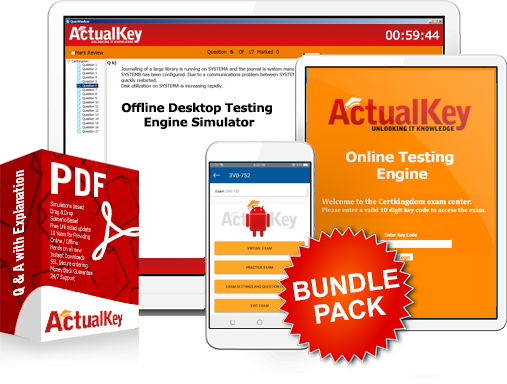
| Bundel Pack Included | PDF + Offline / Andriod Testing Engine and Simulator |
SC-500 Implementing End-to-End Security Controls for Cloud and AI Workloads Exam
SC-500 Exam Overview
The SC-500: Implementing End-to-End Security Controls for Cloud and AI Workloads exam is a Microsoft security certification designed for professionals responsible for protecting cloud, hybrid, and AI environments. The exam focuses on implementing practical security controls across identity, access, governance, networking, storage, databases, compute, applications, AI workloads, and security monitoring.
Microsoft describes the target candidate as a security engineer who protects organizational systems and data across cloud and hybrid environments. Candidates should have practical Azure and hybrid-environment administration experience, including compute, networking, and storage, together with strong familiarity with Microsoft Entra ID and familiarity with Microsoft 365 administration.
SC-500 is particularly relevant for professionals working with Microsoft Azure, Microsoft Entra ID, Microsoft Defender for Cloud, Microsoft Sentinel, Microsoft Security Copilot, Azure Key Vault, Azure Firewall, Azure networking, containers, APIs, and AI security controls.
What Does SC-500 Cover?
The current Microsoft study guide divides SC-500 into four major skill areas:
Manage identity, access, and governance - 20 - 25%
Secure storage, databases, and networking - 25 - 30%
Secure compute - 20 - 25%
Manage and monitor security posture - 20 - 25%
1. Manage Identity, Access, and Governance
This section covers securing access to cloud resources and enforcing governance policies.
Important topics include:
Microsoft Entra ID
Privileged Identity Management (PIM)
Conditional Access
Multifactor authentication (MFA)
Passwordless authentication
Enterprise applications
App registrations
OAuth permissions and consent
Managed identities
Azure Key Vault
Keys, secrets, and certificates
Key Vault firewall configuration
Defender for Key Vault
Azure Policy
Custom and built-in policy definitions
Microsoft Defender for Cloud compliance
Azure RBAC
Microsoft Entra roles
Custom roles
Resource locks
Azure Backup security
Infrastructure as code security controls
2. Secure Storage, Databases, and Networking
SC-500 places the largest percentage weighting on securing storage, databases, and networking.
Candidates should understand:
Azure Storage security
Storage firewall rules
Storage access policies
Defender for Storage
Azure SQL security
Azure SQL auditing
Defender for Databases
Network Security Groups (NSGs)
Application Security Groups (ASGs)
Azure Virtual Network Manager
Azure Virtual WAN security
VPN connections
Microsoft Entra Private Access
Azure Private Endpoints
Azure Private Link
Azure Firewall
Network Watcher diagnostics
Effective security rules
3. Secure Compute and AI Workloads
The compute domain includes traditional cloud workloads as well as modern AI environments.
AI security topics include:
Microsoft Copilot security
Microsoft Purview Data Security Posture Management (DSPM)
Copilot Studio agent protection
Microsoft Entra Agent ID
Agent access management
Defender XDR blast-radius analysis
Azure API Management AI Gateway
Microsoft Foundry security
Defender for AI Service
AI workload guardrails
Data and AI security monitoring
Microsoft 365 agent management
The domain also includes security for:
Azure virtual machines
Servers
Azure Kubernetes Service (AKS)
Azure Container Registry
Azure Container Instances
Azure Container Apps
Azure Functions
Azure Logic Apps
Azure App Service
Azure Web Application Firewall
Azure API Management
Container security and runtime risks
Microsoft's current objectives specifically include AI security, Microsoft Foundry, Entra Agent ID, Copilot-related risks, Defender for AI Service, and AI security dashboards.
4. Manage and Monitor Security Posture
The final domain focuses on continuously identifying risks, monitoring environments, and responding to security issues.
Topics include:
Microsoft Defender for Cloud
Defender CSPM
Security recommendations
Regulatory compliance
Workload protection plans
Multicloud security
AWS and GCP integration
Microsoft Defender Vulnerability Management
External Attack Surface Management (EASM)
Microsoft Sentinel
Sentinel workspaces
Data connectors
Content Hub solutions
Syslog and CEF
Windows Security events
Data Collection Rules
Custom log tables
Automation rules
Playbooks
Data retention
Microsoft Purview Audit
Microsoft Defender XDR
Microsoft Security Copilot
Security Copilot workspaces
Security Copilot permissions
Plugins and agents
SC-500 Exam Preparation
A strong SC-500 preparation strategy should combine Microsoft Learn documentation, hands-on Azure experience, scenario-based questions, and timed practice tests.
Because the exam covers a broad range of technologies, candidates should focus on understanding why a particular security control is appropriate, rather than memorizing isolated definitions.
Scenario-based preparation is especially useful for questions involving:
Least-privilege access
RBAC selection
Managed identities
Conditional Access
Private endpoints
Azure Firewall
Key Vault
Defender for Cloud recommendations
Storage security
AI workload protection
Security Copilot
Sentinel data connectors
Container security
Recent community discussions also indicate that candidates have encountered substantial Security Copilot, Entra RBAC, managed identity, Key Vault, and Sentinel-related material while preparing for SC-500.
SC-500 Practice Questions
SC-500 practice questions can help candidates identify weak areas before exam day. A useful practice test should emphasize realistic scenarios and explanations rather than simple memorization.
SC-500 Practice Test
Prepare for the SC-500 exam with practice questions covering Microsoft Entra ID, Azure security, networking, AI workloads, Defender for Cloud, Sentinel, and Security Copilot.
SC-500 Study Guide
Study SC-500 with a structured guide covering identity, governance, storage, databases, networking, compute, AI security, Defender for Cloud, Sentinel, and Security Copilot.
SC-500 Exam Preparation
Build practical SC-500 knowledge with scenario-based questions, mock exams, Azure security topics, AI workload protection, identity security, and security posture management.
SC-500 Practice Questions
Test your knowledge of SC-500 exam objectives with practice questions covering Azure Key Vault, RBAC, Conditional Access, Azure Firewall, Defender for Cloud, Sentinel, and AI security.
Microsoft SC-500 Certification
SC-500 validates cloud and AI security skills across identity, governance, networking, storage, compute, AI workloads, monitoring, and Microsoft security technologies.
Topic 1, Contoso Ltd.
Case Study: Contoso, Ltd.
Company Background
Contoso, Ltd. is a financial analytics company that is modernizing its cloud security architecture in
Microsoft Azure. Contoso uses Azure Kubernetes Service, Azure Functions, Azure SQL Database,
Azure Storage, Microsoft Defender for Cloud, Microsoft Entra Privileged Identity Management, and
Azure Arc to secure production workloads and AI-based services.
Contoso has one Azure subscription named Sub1 that is linked to a Microsoft Entra tenant named contoso.com.
Existing Azure Environment
Subscription and Resource Groups
Sub1 contains the following resource groups:
Resource Group Purpose
RG-App Hosts production application workloads
RG-Data Hosts storage and database services
RG-Security Hosts monitoring and security resources
RG-AI Hosts AI and agent-related workloads
Compute Resources
Contoso has the following compute resources:
Resource Type Description
AKS1 Azure Kubernetes Service cluster Hosts production containerized applications
ACR1 Azure Container Registry Stores container images used by AKS1
Fa1 Azure Function App Processes production AI transaction events
Fa2 Azure Function App Runs test and diagnostic jobs only
Fa3 Azure Function App Processes production security automation events
Server1 On-premises server Hosts a legacy security processing workload
AKS1 uses a managed identity. A separate user-assigned managed identity named ID1 is used by the deployment automation process.
Data Resources
Contoso has the following data resources:
Resource Type Description
SQLServer1 Azure SQL logical server Hosts production SQL databases
SQLdb1 Azure SQL Database Stores sensitive application data
storage2 Azure Storage account Stores AI output files and security processing artifacts
Current Security Configuration
Microsoft Defender for Cloud is enabled for Sub1. Defender Cloud Security Posture Management is also enabled.
Contoso has not yet enabled a Defender workload protection plan for AKS1.
Server1 is not currently connected to Azure. The security team wants Server1 to be visible in Azure
for monitoring, compliance, and security operations.
Users and Administrators
The Microsoft Entra tenant contains the following users:
Questions and Answers PDF 3/85
User Current Role / Responsibility
User1 AI engineering user who requests privileged access when required
Admin1 Security administrator for Sub1 and approved Defender for Cloud delegate
Admin2 General application administrator
Admin3 Privileged Role Administrator for Microsoft Entra roles
Admin4 Helpdesk administrator
Privileged Identity Management Configuration
Contoso uses Microsoft Entra Privileged Identity Management.
The following PIM role settings are configured:
Role Approval Required Eligible Approvers Maximum Active Duration
AI Administrator Yes Admin1 and Admin3 only 1 day
Agent ID Developer Yes Admin1 only 2 days
Admin3 has permission to manage eligible and active assignments for Microsoft Entra roles.
Admin2 is not configured as an approver for the AI Administrator role.
Planned Changes
Contoso plans to implement the following changes:
Configure AKS1 so that it can pull images from ACR1 without granting unnecessary permissions.
Configure ID1 so that the deployment automation process can modify Azure resources required by
the application deployment.
Configure SQLdb1 so that access is controlled by Microsoft Entra authentication and Conditional Access.
Configure storage2 so that selected blobs can use a separate encryption boundary without changing
encryption for the entire storage account.
Implement the production Function App security changes only for Function Apps that process
production workload data.
Enable the correct Microsoft Defender for Cloud plan to protect applications running on AKS1.
Delegate the Defender for Cloud planned change to the least-privileged administrator.
Configure Server1 so that it can be monitored and managed through Azure security tooling.
Technical Requirements
Contoso has the following technical requirements:
AKS and Container Registry
AKS1 must pull container images from ACR1.
AKS1 must receive only the minimum role required to pull images.
The managed identity ID1 must be able to perform deployment automation tasks that modify Azure resources.
Permissions must follow the principle of least privilege.
Azure SQL Database
SQLdb1 must support Microsoft Entra-based authentication.
Access to SQLdb1 must be controlled by Conditional Access.
SQL authentication must not be used for the planned access model.
Azure Storage
storage2 must support granular encryption for selected application data.
The encryption change must not force all data in storage2 to use the same account-level encryption
configuration.
The solution must support future separation of encrypted data by workload.
Azure Functions
Only Function Apps that process production workload data must be included in the implementation.
Fa1 processes production AI transaction events and must be included.
Fa2 is used only for diagnostics and test jobs and must not be included.
Fa3 processes production security automation events and must be included.
Microsoft Defender for Cloud
Questions and Answers PDF 5/85
Applications hosted on AKS1 must be protected by the appropriate Defender for Cloud workload plan.
The Defender for Cloud planned change must be delegated to the user with the least privilege required.
Azure Arc and Monitoring
Server1 must be onboarded to Azure.
Security telemetry from Server1 must be collected centrally.
The solution must support security monitoring through Azure-native tooling.
Question: 1
HOTSPOT
You need to configure the AKS1 and ID 1 managed identities to meet the technical requirements.
The solution must follow the principle of least privilege.
Which role should you assign to each identity? To answer, select the appropriate options in the answer area.
NOTE: Each correct selection is worth one point.
Answer:
Explanation:
AKS1: AcrPull; ID1: Contributor
AKS1 needs to pull images from Azure Container Registry, so AcrPull is the least-privilege registry role
for the cluster identity. ID1 requires Contributor in the visible answer area because the referenced
technical requirement requires resource changes beyond a read-only or pull-only role. The important
distinction is scope: AKS image retrieval should not receive Contributor, while the separate managed
identity receives the broader role only for its implementation task. This domain is tested through
precise scope control: tenant, subscription, resource, application, and data-plane authorization are
not interchangeable. The correct choice applies the smallest identity or governance control that
enforces the stated requirement. Options that only add users, create registrations, or provide broad
administrator access fail because they do not directly enforce the requested access behavior. The
result is a direct exam-style implementation choice: it changes the required security behavior
without relying on unrelated monitoring, manual cleanup, or excessive privilege. Official Microsoft
source/topic: SC-500 Study Guide " AKS and managed identities; Microsoft Learn " ACR pull role and Azure RBAC.
==============================================================
Question: 2
You need to implement the planned change for SQLdb1
Which two actions should you perform? Each correct answer presents part of the solution.
NOTE: Each correct selection is worth one point
A. Create a compliance policy.
B. Configure Microsoft Entra authentication for SQLServer1.
C. Create a Conditional Access policy.
D. Configure federated client identity for SQLdb1.
E. Configure a user-assigned managed identity for SQLdb1.
Answer: BC
Explanation:
Microsoft Entra authentication must be configured on the SQL server before Microsoft Entra
identities and Conditional Access can govern database access. A Conditional Access policy then
enforces the planned access control for SQLdb1. A compliance policy does not authenticate SQL
connections. Federated client identity and a user-assigned managed identity are used for workload
identity scenarios, not for enforcing user sign-in requirements against Azure SQL in this case. The
exam objective emphasizes practical identity enforcement rather than cosmetic configuration. A
valid answer must identify who authenticates, what permission is granted, where the scope is
applied, and whether the method continues to work without passwords or secrets. That is why the
selected answer is preferred over broader administrative roles or unrelated access settings. The
result is a direct exam-style implementation choice: it changes the required security behavior
without relying on unrelated monitoring, manual cleanup, or excessive privilege. Official Microsoft
source/topic: SC-500 Study Guide " Azure SQL authentication and conditional access; Microsoft Learn
" Microsoft Entra authentication for Azure SQL.
==============================================================
Question: 3
You need to implement the planned change for storage2 The solution must meet the technical requirements for storage encryption.
What should you do?
A. Enable purge protection for storage2.
B. Create an encryption scope in storage2.
C. Configure storage2 to use an account encryption key.
D. Assign an Azure role-based access control (Azure RBAC) role to storage2.
Answer: B
Explanation:
An encryption scope provides a named encryption boundary for blobs and can use Microsoftmanaged
or customer-managed keys depending on configuration. The planned change refers to
storage encryption, and the visible answer set points to a storage2-specific encryption configuration
rather than vault purge protection or Azure RBAC. Account-level encryption keys affect the entire
account; encryption scopes are the correct more granular storage encryption control. The important
exam skill is separating data-plane access, management-plane administration, and network
reachability. A storage, database, or firewall setting must be selected because it enforces the exact
path requested in the scenario. Distractors often look plausible because they improve security
generally, but they do not satisfy the protocol, scope, or automation requirement stated in the
question. The result is a direct exam-style implementation choice: it changes the required security
behavior without relying on unrelated monitoring, manual cleanup, or excessive privilege. Official
Microsoft source/topic: SC-500 Study Guide " storage encryption; Microsoft Learn " Azure Storage
encryption scopes.
==============================================================
Question: 4
You need to implement the function apps to meet the technical requirements.
Which apps should you include in the implementation?
A. Fa1 and Fa2 only
B. Fa2 and Fa3 only
C. Fa1 and Fa3 only
D. Fa1, Fa2, and Fa3
Answer: C
Explanation:
The correct implementation includes Fa1 and Fa3 only according to the visible answer area. In Azure
Functions security scenarios, apps are included only when their hosting, authentication, identity, or
network configuration matches the stated technical controls. Including Fa2 would apply the
implementation to an app that does not meet those requirements. The selected set therefore
narrows the change to the function apps that require the security implementation. For SC-500,
compute controls are evaluated by workload type: VM, Arc server, AKS, container registry, container
group, Functions, Logic Apps, App Service, and AI agent runtime. The right answer uses the Microsoft
control that is native to that workload. Broad Azure roles or unrelated monitoring services would
either overgrant access or fail to enforce the required security state. The result is a direct exam-style
implementation choice: it changes the required security behavior without relying on unrelated
monitoring, manual cleanup, or excessive privilege. Official Microsoft source/topic: SC-500 Study
Guide " Azure Functions security controls; Microsoft Learn " App Service/Functions authentication
and network security.
==============================================================
Question: 5
You need to delegate a user to implement the planned change for Defender for Cloud. The solution
must follow the principle of least privilege.
Which user should you choose?
A. Admin1
B. Admin2
C. Admin3
D. Admin4
Answer: A
Explanation:
Admin1 is the visible least-privilege delegate for the planned Defender for Cloud change. Defender
for Cloud administration should be delegated to the user with the specific security or Defender
permissions needed for the task, not to broader administrators unless required. Choosing a higher
privileged account would violate the least-privilege requirement. The source file’s case-study
background is not visible, so the answer follows the displayed answer selection and the general
Defender for Cloud RBAC model. The SC-500 study guide places these tasks under security posture,
event collection, Defender CSPM, EASM, Sentinel, and Security Copilot operations. The exam expects
the control that minimizes analyst effort while preserving correct permissions and data flow. The
selected answer reflects that service boundary and avoids a broader or merely investigative
alternative. The result is a direct exam-style implementation choice: it changes the required security
behavior without relying on unrelated monitoring, manual cleanup, or excessive privilege. Official
Microsoft source/topic: SC-500 Study Guide " Defender for Cloud least-privilege administration;
Microsoft Learn " built-in Azure roles for Defender for Cloud.
==============================================================
Question: 6
You need to protect the applications hosted on AKS1. The solution must meet the technical requirements.
Which Defender for Cloud plan should you enable?
A. Microsoft Defender for Servers
B. Microsoft Defender for App Service
C. Microsoft Defender for Containers
D. Microsoft Defender for Resource Manager
E. Microsoft Defender for Storage
Answer: C
Explanation:
AKS workload protection is provided by Microsoft Defender for Containers. That plan covers
Kubernetes posture, runtime threat detection, image risk signals, and container workload
protections. Defender for Servers protects VMs and Arc servers, Defender for App Service protects
For the strongest SEO approach, use "practice test," "practice questions," "study guide," and "exam preparation" as the primary commercial terms rather than "dumps." Microsoft's official objectives are the best source for keeping the page aligned with the current exam.
Student Reviews
The following are sample review copy for marketing/layout purposes and should not be presented as verified customer testimonials unless they correspond to real customers.
Liam Carter - Canada
"The SC-500 practice questions helped me understand where I needed more study, especially Azure networking and identity."
Amina Hassan - Egypt
"The scenario-based questions made it easier to connect Microsoft Entra concepts with practical security situations."
Daniel Weber - Germany
"I liked the explanations because they helped me understand why one security control was better than another."
Sofia Rossi - Italy
"The practice tests gave me a useful way to review Defender for Cloud and Azure security concepts."
Noah Williams - United States
"The structured SC-500 preparation helped me organize a very broad exam syllabus."
Priya Nair - India
"The AI security topics were especially useful because SC-500 covers newer technologies and workloads."
Oliver Smith - United Kingdom
"The mock questions helped me identify gaps in networking, RBAC, and Key Vault."
Fatima Zahra - Morocco
"I found the scenario-based format much more useful than simply reading definitions."
Mateo García - Spain
"The practice material gave me a good checklist for reviewing the major SC-500 objectives."
Kenji Tanaka - Japan
"The questions covering managed identities and Azure security controls were helpful for my preparation."
Lucas Silva - Brazil
"The practice tests helped me become more comfortable with cloud security scenarios."
Emily Brown - Australia
"The SC-500 study material made it easier to divide my preparation into manageable sections."
Yusuf Demir - Türkiye
"I used the questions to review Microsoft security technologies and focus on my weaker topics."
Chloe Martin - France
"The explanations helped me connect exam concepts with real Azure security implementations."
Arjun Perera - Sri Lanka
"The mock exam format was useful for checking my knowledge before taking the certification exam."
1. What is the SC-500 exam?
SC-500 is Microsoft's exam for the Microsoft Certified: Cloud and AI Security Engineer Associate certification. It focuses on implementing end-to-end security controls across cloud, hybrid, and AI workloads.
2. What does SC-500 cover?
The exam covers identity, access and governance; storage, databases and networking; compute and AI security; and security posture and monitoring.
3. Is SC-500 difficult?
Difficulty depends on your Azure and Microsoft security experience. Candidates with practical experience in Azure administration, networking, storage, identity, and security services should have a stronger foundation.
4. Is SC-500 related to AZ-500?
SC-500 covers many cloud-security concepts familiar to AZ-500 candidates but expands the scope substantially into AI security and broader Microsoft security technologies. Community discussions have specifically compared SC-500 with the retiring AZ-500.
5. What should I study first for SC-500?
Start with Microsoft Entra ID, Azure RBAC, Conditional Access, Key Vault, Azure networking, storage security, Defender for Cloud, and then move into AI security, Sentinel, and Security Copilot.
6. Does SC-500 cover AI security?
Yes. AI security is explicitly included, including Copilot-related risks, Microsoft Foundry, Entra Agent ID, Defender for AI Service, agent security, and AI security monitoring.
7. Does SC-500 cover Microsoft Security Copilot?
Yes. The exam objectives include Security Copilot workspaces, permissions, roles, plugins, and agents.
8. Does SC-500 cover Microsoft Sentinel?
Yes. Candidates should understand Sentinel workspaces, roles, data connectors, content hub solutions, Syslog/CEF, Windows events, automation rules, playbooks, and retention.
9. Does SC-500 cover Microsoft Entra ID?
Yes. Entra ID is a major part of the identity, access, and governance domain, including PIM, Conditional Access, authentication methods, application identities, permissions, and managed identities.
10. What is the most heavily weighted SC-500 domain?
Secure storage, databases, and networking currently carries the highest weighting at 25–30%.
11. Are SC-500 practice tests useful?
Yes. Practice tests can help identify weak areas and improve familiarity with scenario-based questions, provided they are used as a supplement to genuine study and hands-on practice.
12. How should I prepare for SC-500?
Use Microsoft Learn, review the official skills measured, gain hands-on Azure experience, study Microsoft security documentation, and use reputable practice tests to assess your understanding.
13. Does SC-500 include case studies or scenarios?
Candidates have reported scenario-oriented questions and case-study experiences during the beta period.
14. Where can I find official SC-500 study material?
Microsoft Learn provides the official SC-500 study guide and links to relevant Azure, Entra, Defender, Sentinel, Key Vault, networking, and security documentation.
15. How can I improve my SC-500 exam readiness?
Focus on understanding security decisions rather than memorizing answers. Practice explaining why a specific identity, network, data, compute, AI, or monitoring control is appropriate for a given scenario.
I Got My Success Due To Actualkey SC-500 Bundle Pack Actualkey experts I got passed in the SC-500 exam without any worries at all, these exam material products gave me the reason to relax.
Budi Saptarmat
Yahoo! Got Successfully Through The SC-500 Exam Passing Exam is not a easy thanks to Acutalkey.com for providing me actual SC-500 Implementing End-to-End Security Controls for Cloud and AI Workloads Exam training with there included the Offline and Android simulators helps me success
Melinda
SC-500 Exam Best Preparation I have been preparing for SC-500 Implementing End-to-End Security Controls for Cloud and AI Workloads Exam, I was not sure that I'll be able to pass because of the fact that I am not a good student however;Actualkey.com provided me best and simple exam training pdf's and I passed. I now recommend everyone
Antonio Moreno
Actualkey.com SC-500 Offline Simulator is Best My choice to select Actualkey.com and go for the preparation SC-500 Implementing End-to-End Security Controls for Cloud and AI Workloads Exam, because I got the short way with the easy way
Liliane Meichner
Actualkey.com SC-500 Exam PDF"s passed with in a week SC-500 exam pdf's that's amazing
James Wilson
Microsoft - RELATED EXAMS
Designing a Database Server Infrastructure by Using Microsoft SQL Server 2005
Questions: 92 Questions | September 16, 2024
Optimizing and Maintaining a Database Administration Solution by Using SQL Server 2005
Questions: 215 | September 16, 2024
UPGRADE: MCDBA Skills to MCITP Database Administrator by Using Microsoft SQL Server 2005
Questions: 186 Questions | September 16, 2024
Microsoft .NET Framework 2.0 - Windows-Based Client Development
Questions: 245 Questions | September 16, 2024
Microsoft .NET Framework 2.0 - Distributed Application Development
Questions: 144 | September 16, 2024
Microsoft .NET Framework 2.0-Application Development Foundation
Questions: 456 | September 16, 2024
Designing and Developing Web-Based Applications by Using the Microsoft .NET Framework
Questions: 74 | September 16, 2024
Designing and Developing Windows-Based Applications by Using the Microsoft .NET Framework
Questions: 72 Questions | September 16, 2024
Designing and Developing Enterprise Applications by Using the Microsoft .NET Framework
Questions: 86 | September 16, 2024
UPGRADE: MCAD Skills to MCPD Web Developer by Using the Microsoft .NET Framework
Questions: 584 | September 16, 2024
UPGRADE: MCAD Skills to MCPD Windows Developer by Using the Microsoft .NET Framework
Questions: 559 | September 16, 2024
UPGRADE: MCSD Microsoft .NET Skills to MCPD Enterprise Application Developer: Part 1
Questions: 609 | September 16, 2024
UPGRADE: MCSD Microsoft .NET Skills to MCPD Enterprise Application Developer: Part 2
Questions: 168 | September 16, 2024
TS: Deploying and Maintaining Windows Vista Client and 2007 Microsoft Office System Desktops
Questions: 92 | September 16, 2024
Windows Server 2008 Applications Infrastructure, Configuring
Questions: 494 | September 16, 2024
TS: Upgrading from Windows Server 2003 MCSA to, Windows Server 2008, Technology Specializations
Questions: 576 | September 16, 2024
Designing a Microsoft Office Enterprise Project Management (EPM) Solution
Questions: 50 Questions | September 16, 2024
Customizing Portal Solutions with Microsoft SharePoint Products and Technologies
Questions: 75 | September 16, 2024
Deploying Business Desktops with Microsoft Windows Server 2003 and Microsoft Office 2003
Questions: 53 | September 16, 2024
Implementing and Administering Security in a Microsoft Windows Server 2003 Network
Questions: 288 | September 16, 2024
Designing, Deploying, and Managing a Network Solution for a Small- and Medium-Sized Business
Questions: 204 | September 16, 2024
Supporting Users and Troubleshooting a Microsoft Windows XP Operating System
Questions: 114 | September 16, 2024
TS: Microsoft SQL Server 2008, Business Intelligence Development and Maintenance
Questions: 399 | September 16, 2024
PRO: Designing, Optimizing and Maintaining a Database Administrative Solution Using Microsoft SQL Server 2008
Questions: 189 | September 16, 2024
Developing E-Business Solutions Using Microsoft BizTalk Server 2004
Questions: 40 | September 16, 2024
Developing Microsoft Office Solutions Using XML with Office Professional Edition 2003
Questions: 50 | September 16, 2024
Planning and Building a Messaging and Collaboration Environment Using Microsoft Office System and Microsoft Windows Server 2003
Questions: 61 | September 16, 2024
TS: Microsoft .NET Framework 3.5, ADO.NET Application Development
Questions: 287 | September 16, 2024
TS: Microsoft .NET Framework 3.5, ASP.NET Application Development
Questions: 364 | September 16, 2024
TS: Microsoft Office Project Server 2007, Managing Projects
Questions: 145 | September 16, 2024
TS: Microsoft .NET Framework 3.5, Windows Forms Application Development
Questions: 48 | September 16, 2024
Upgrade: Transition Your MCITP SQL Server 2005 DBA to MCITP SQL Server 2008
Questions: 98 | September 16, 2024
Pro: Designing and Deploying Messaging Solutions with Microsoft Exchange Server 2010
Questions: 379 | July 1, 2024
Pro: Designing and Developing ASP.NET Applications Using the Microsoft .NET Framework 3.5
Questions: 281 | September 16, 2024
TS: Microsoft SQL Server 2008, Implementation and Maintenance
Questions: 328 | September 16, 2024
Microsoft System Center Configuration Manager 2007,Configuring
Questions: 184 | September 16, 2024
PRO: Designing and Developing Microsoft SharePoint 2010 Applications
Questions: 200 | September 16, 2024
Upgrading to Windows 7 MCITP Enterprise Desktop Support Technician
Questions: 50 | September 16, 2024
TS: Windows Applications Development with Microsoft .NET Framework 4
Questions: 278 | September 16, 2024
TS: Windows Communication Foundation Development with Microsoft .NET Framework 4
Questions: 473 | September 16, 2024
TS: Web Applications Development with Microsoft .NET Framework 4
Questions: 405 | September 16, 2024
Pro: Designing and Developing Web Applications Using Microsoft .NET Framework 4
Questions: 288 | September 16, 2024
TS: Developing Business Process and Integration Solutions by Using Microsoft BizTalk Server 2010
Questions: 100 | September 16, 2024
Designing and Providing Microsoft Volume Licensing Solutions to Small and Medium Organizations
Questions: 232 | September 16, 2024
TS: Forefront Protection for Endpoints and Applications, Configuring
Questions: 105 | September 16, 2024
Upgrade: Transition Your MCITP SQL Server 2005 DBD to MCITP SQL Server 2008 DBD
Questions: 154 | July 1, 2024
Pro: Windows Server 2008 R2, Virtualization Administrator
Questions: 176 | September 16, 2024
PRO: Designing Database Solutions and Data Access Using Microsoft SQL Server 2008
Questions: 183 | July 1, 2024
Managing and Maintaining a Microsoft Windows Server 2003 Environment
Questions: 450 | July 1, 2024
Implementing Data Models and Reports with Microsoft SQL Server 2012
Questions: 330 | July 1, 2024
Implementing a Data Warehouse with Microsoft SQL Server 2012
Questions: 322 | September 16, 2024
Transition Your MCTS on SQL Server 2008 to MCSA: SQL Server 2012, Part 2
Questions: 300 | September 16, 2024
Configuring and Deploying a Private Cloud with System Center 2012
Questions: 462 | September 16, 2024
Monitoring and Operating a Private Cloud with System Center 2012
Questions: 457 | September 16, 2024
Administering and Deploying System Center 2012 Configuration Manager
Questions: 208 | September 16, 2024
Microsoft Dynamics AX 2012 Process Manufacturing Production and Logistics
Questions: 149 | July 1, 2024
Advanced Metro style App Development using HTML5 and JavaScript
Questions: 225 | September 16, 2024
Transition Your MCTS on SQL Server 2008 to MCSA: SQL Server 2012, Part 1
Questions: 230 | September 16, 2024
Transition Your MCITP: Database Administrator 2008 or MCITP: Database Developer 2008 to MCSE: Data Platform
Questions: 261 | September 16, 2024
Transition Your MCITP: Business Intelligence Developer 2008 to MCSE: Business Intelligence
Questions: 132 | September 16, 2024
Designing Database Solutions for Microsoft SQL Server 2012
Questions: 231 | September 16, 2024
Designing Business Intelligence Solutions with Microsoft SQL Server 2012 Exam
Questions: 314 | September 16, 2024
Microsoft Programming in HTML5 with JavaScript and CSS3 Exam
Questions: 342 | September 16, 2024
Delivering Continuous Value with Visual Studio 2012 Application Lifecycle Management
Questions: 219 | July 1, 2024
Enterprise Voice & Online Services with Microsoft Lync Server 2013
Questions: 158 | September 16, 2024
Developing Microsoft SharePoint Server 2013 Core Solutions
Questions: 181 | September 16, 2024
Upgrade your MCPD: Web Developer 4 to MCSD: Web Applications
Questions: 229 | September 16, 2024
Essentials of Developing Windows Metro style Apps using C#
Questions: 168 | September 16, 2024
Server Virtualization with Windows Server Hyper-V and System Center
Questions: 149 | September 16, 2024
Essentials of Developing Windows Metro style Apps using HTML5 and JavaScript
Questions: 166 | September 16, 2024
TS: Windows Small Business Server 2011 Standard, Configuring
Questions: 55 | September 16, 2024
TS: MS Internet Security & Acceleration Server 2006, Configuring
Questions: 80 | September 16, 2024
TS: Microsoft System Center Operations Manager 2007, Configuring
Questions: 94 | September 16, 2024
TS: System Center Virtual Machine Manager 2008, Configuring
Questions: 45 | September 16, 2024
PRO: Designing a Business Intelligence Infrastructure Using Microsoft SQL Server 2008
Questions: 115 | September 16, 2024
Upgrade: Transition Your MCITP SQL Server 2005 BI Developer to MCITP SQL Server 2008 BI Developer
Questions: 203 | September 16, 2024
Recertification for MCSD: Application Lifecycle Management
Questions: 292 | September 16, 2024
TS: Microsoft .NET Framework 3.5 Windows Presentation Foundation Application Development
Questions: 101 | September 16, 2024
TS: Microsoft .NET Framework 3.5 - Windows Communication Foundation
Questions: 270 | September 16, 2024
TS: Visual Studio Team Foundation Server 2010, Administration
Questions: 72 | September 16, 2024
Pro: Designing and Developing Windows Applications Using Microsoft .NET Framework 4
Questions: 239 | September 16, 2024
TS: Microsoft Windows SharePoint Services 3.0 Application Development
Questions: 109 | September 16, 2024
Upgrade: Transition your MCPD Enterprise Application Developer Skills to MCPD Enterprise Application Developer 3.5, Part 1
Questions: 153 | September 16, 2024
UPGRADE: Transition your MCPD Enterprise Application Developer Skills to MCPD Enterprise Application Developer 3.5, Part 2
Questions: 123 | September 16, 2024
TS: System Center Data Protection Manager 2007, Configuring
Questions: 74 | September 16, 2024
Designing and Providing Microsoft Volume Licensing Solutions to Large Organizations
Questions: 126 | September 16, 2024
TS: Designing, Assessing, and Optimizing Software Asset Management (SAM)
Questions: 85 | September 16, 2024
MS Office Communication Server 2007-U.C Voice Specialization
Questions: 174 | September 16, 2024
Microsoft Office Communications Server 2007 R2 U.C. Voice Specialization
Questions: 101 | September 16, 2024
Windows Server 2008 Hosted Environments, Configuring and Managing
Questions: 75 | September 16, 2024
Designing and Providing Microsoft Volume Licensing Solutions to Large Organisations
Questions: 104 | September 16, 2024
Pro: Designing and Developing Windows Applications Using the Microsoft .NET Framework 3.5
Questions: 105 | July 1, 2024
Pro: Designing and Developing Enterprise Applications Using the Microsoft .NET Framework 3.5
Questions: 152 | September 16, 2024
Universal Windows Platform – App Data, Services, and Coding Patterns (beta)
Questions: 47 | September 16, 2024
Universal Windows Platform – App Architecture and UX/UI (beta)
Questions: 76 | September 16, 2024
Microsoft Dynamics AX 2012 R3 CU8 Installation and Configuration
Questions: 48 | July 1, 2024
Designing and Deploying Microsoft Exchange Server 2016 Exam
Questions: 166 | September 16, 2024
Introduction to Programming Using Block-Based Languages (Touch Develop)
Questions: 72 | July 1, 2024
Development, Extensions and Deployment for Microsoft Dynamics 365 for Finance and Operations
Questions: 90 | July 1, 2024
Financial Management in Microsoft Dynamics 365 for Finance and Operations
Questions: 73 | July 1, 2024
Designing and Providing Microsoft Licensing Solutions to Large Organizations
Questions: 195 | July 1, 2024
Distribution and Trade in Microsoft Dynamics 365 for Finance and Operations
Questions: 93 | July 1, 2024
Administering Microsoft System Center Configuration Manager and Cloud Services Integration
Questions: 150 | July 1, 2024
Microsoft Configuring and Operating a Hybrid Cloud with Microsoft Azure Stack Exam
Questions: 99 | July 1, 2024
Microsoft Azure Solutions Architect Certification Transition Exam
Questions: 393 | July 1, 2024
Outlook 2016: Core Communication, Collaboration and Email Skills
Questions: 35 | July 1, 2024
Microsoft Developing Solutions for Microsoft Azure Exam
Questions: 170 / 6 Case Study | July 1, 2024
Designing and Implementing a Data Science Solution on Azure Exam
Questions: 506 | July 28, 2025
Microsoft 365 Teamwork Administrator Certification Transition Exam
Questions: 120 | July 1, 2024
Microsoft Messaging Administrator Certification Transition Exam
Questions: 155 | July 1, 2024
Microsoft Excel 2016: Core Data Analysis, Manipulation, and Presentation Exam
Questions: 35 | November 8, 2024
Microsoft Word 2016: Core Document Creation, Collaboration and Communication Exam
Questions: 35 | November 8, 2024
Microsoft Dynamics 365 for Finance and Operations, Supply Chain Management Exam
Questions: 414 | April 7, 2026
Microsoft Dynamics 365 for Finance and Operations, Manufacturing Exam
Questions: 207 | November 8, 2024
Building Applications and Solutions with Microsoft 365 Core Services Exam
Questions: 242 | July 1, 2024
Microsoft Dynamics 365: Finance and Operations Apps Solution Architect Exam
Questions: 322 | December 19, 2025
Planning and Administering Microsoft Azure for SAP Workloads Exam
Questions: 324 | May 28, 2026
Microsoft Dynamics 365: Finance and Operations Apps Developer Exam
Questions: 379 | September 3, 2026
Administering Relational Databases on Microsoft Azure (beta) Exam
Questions: 408 | June 12, 2026
Microsoft Dynamics 365 Business Central Functional Consultant (beta) Exam
Questions: 320 | September 15, 2026
Configuring and Operating a Hybrid Cloud with Microsoft Azure Stack Hub Exam
Questions: 176 | July 1, 2024
Microsoft Dynamics 365 Fundamentals Customer Engagement Apps (CRM) (beta) Exam
Questions: 159 | October 12, 2024
Microsoft Dynamics 365 Fundamentals Finance and Operations Apps (ERP) Exam
Questions: 151 | May 27, 2025
Configuring and Operating Windows Virtual Desktop on Microsoft Azure Exam
Questions: 299 | August 7, 2026
Designing and Implementing a Microsoft Azure AI Solution (beta) Exam
Questions: 423 | July 23, 2026
Designing and Implementing Microsoft Azure Networking Solutions Exam
Questions: 327 | May 4, 2026
Designing Microsoft Azure Infrastructure Solutions (beta) Exam
Questions: 400 | September 3, 2026
Designing and Implementing Cloud-Native Applications Using Microsoft Azure Cosmos DB (beta) Exam
Questions: 194 | July 9, 2026
Configuring Windows Server Hybrid Advanced Services (beta) Exam
Questions: 281 | July 9, 2026
Administering Windows Server Hybrid Core Infrastructure (beta) Exam
Questions: 260 | February 12, 2026
Microsoft Designing and Implementing Enterprise-Scale Analytics Solutions Using Microsoft Azure and Microsoft Power BI Exam
Questions: 160 | July 1, 2024
Microsoft Dynamics 365 Supply Chain Management Functional Consultant Expert Exam
Questions: 232 | May 9, 2026
Implementing Data Engineering Solutions Using Microsoft Fabric Exam
Questions: 149 | September 5, 2026
Microsoft 365 Copilot and Agent Administration Fundamentals Exam
Questions: 75 | August 7, 2026
Operationalizing Machine Learning and Generative AI Solutions Exam
Questions: 60 | May 28, 2026
Implementing Data Engineering Solutions Using Azure Databricks Exam
Questions: 91 | September 3, 2026
Designing and Building Integrated AI Agent Solutions in Copilot Studio Exam
Questions: 94 | September 3, 2026
Implementing End-to-End Security Controls for Cloud and AI Workloads Exam
Questions: 81 | September 3, 2026
Exams code, certifications, vendor or keywords

Copyright © 2009 - 2026 Actualkey. All rights reserved.